Single-Cell Proteomics Guide — Technologies, Methods, and Applications
Complete guide to single-cell proteomics in 2026. Learn about SCoPE-MS, plexDIA, mass cytometry, and how single-cell protein analysis is transforming biology.
Introduction
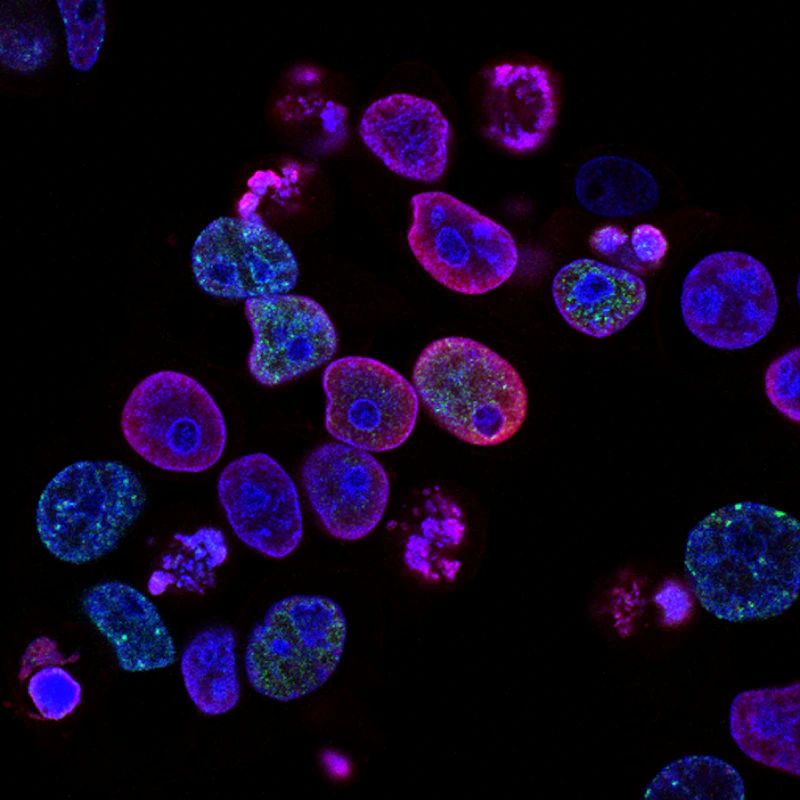
Biology is built from individual cells, yet most proteomic studies analyze bulk samples containing millions of cells. This averaging hides the remarkable diversity that exists between individual cells — diversity that can determine whether a tumor responds to therapy, how stem cells differentiate, or why some neurons are vulnerable to disease.
Single-cell proteomics aims to measure proteins in individual cells, revealing heterogeneity that bulk measurements mask. In 2026, this rapidly advancing field is transitioning from proof-of-concept to biological discovery. This guide covers the technologies, computational methods, and biological applications driving this transformation.
Why Single-Cell Proteomics Matters
The Problem with Bulk Measurements
Imagine measuring the average height of everyone in a room containing both children and adults. The average tells you something, but it misses the most important detail: there are two distinct populations.
The same problem plagues bulk proteomics:
- Tumor heterogeneity: Cancer cells within a single tumor can have dramatically different protein profiles
- Immune cell diversity: A blood sample contains dozens of immune cell types with distinct proteomes
- Rare cell populations: Stem cells, circulating tumor cells, or drug-resistant cells may represent <1% of a sample
What Single-Cell Proteomics Reveals
- Cell type classification based on protein expression
- Cell state transitions (e.g., during differentiation or activation)
- Post-translational modification heterogeneity across cells
- Protein co-expression patterns that define functional modules
Mass Spectrometry-Based Approaches
SCoPE-MS and SCoPE2
Single Cell Proteomics by Mass Spectrometry (SCoPE-MS), developed by Nikolai Slavov's lab, was the pioneering approach. The key innovation: using TMT (Tandem Mass Tag) labeling with a carrier channel containing ~200 cells to boost peptide identification, while individual cells occupy the other TMT channels.
SCoPE2 (and subsequent improvements) refined the approach with:
- Minimal sample preparation to reduce losses
- Automated cell isolation using cellenONE or FACS
- Optimized LC-MS/MS settings for low-input samples
- Identification of 1,000-3,000 proteins per cell
plexDIA for Single Cells
plexDIA combines multiplexed sample preparation with Data-Independent Acquisition, offering:
- Higher throughput than DDA-based approaches
- More complete quantification (fewer missing values)
- Compatibility with label-free or mTRAQ labeling
nanoPOTS and Other Miniaturized Platforms
nanoPOTS (Nanodroplet Processing in One pot for Trace Samples) minimizes surface losses by performing all sample preparation in nanoliter-volume droplets:
- Dramatically reduces protein loss during preparation
- Compatible with FACS-sorted or laser-capture-microdissected cells
- Can be coupled with various MS acquisition strategies
Proteome Coverage Benchmarks (2026)
| Method | Proteins/Cell | Throughput | Key Advantage |
|---|---|---|---|
| SCoPE2/plexDIA | 2,000-4,000 | ~100 cells/day | Quantitative accuracy |
| nanoPOTS + DIA | 1,500-3,000 | ~50 cells/day | Minimal loss |
| label-free single-cell | 1,000-2,500 | ~200 cells/day | Simplicity |
| timsTOF SCP | 2,000-4,000 | ~100 cells/day | Ion mobility resolution |
Antibody-Based Approaches
Mass Cytometry (CyTOF)
CyTOF uses metal-tagged antibodies (instead of fluorescent ones) detected by mass spectrometry:
- Measures 40-60 proteins simultaneously per cell
- No spectral overlap (unlike fluorescent flow cytometry)
- High throughput: millions of cells per experiment
- Limited to proteins with available antibodies
CITE-seq
Cellular Indexing of Transcriptomes and Epitopes by Sequencing measures both surface proteins and mRNA in the same single cell:
- Uses DNA-barcoded antibodies
- Compatible with 10x Genomics droplet platforms
- Bridges transcriptomics and proteomics at single-cell resolution
- Typically measures ~200 surface proteins
Imaging-Based Methods
Imaging mass cytometry (IMC) and MIBI-TOF use metal-labeled antibodies combined with mass spectrometry imaging to map proteins within tissue sections with subcellular resolution:
- 40+ proteins measured simultaneously
- Preserves spatial information
- Lower throughput but rich spatial context
Sample Preparation: The Critical Bottleneck
Sample preparation is the single biggest challenge in single-cell proteomics. When you're working with the ~200 picograms of protein in a single mammalian cell, every loss matters.
Key Principles
- Minimize surfaces: Every surface contact loses proteins. Use low-bind plastics and minimize transfers.
- Minimize volumes: Smaller volumes mean higher concentrations and less surface loss.
- Fast lysis: Efficient cell lysis ensures maximum protein extraction.
- Minimal cleanup: Each cleanup step loses material. Skip unnecessary desalting when possible.
Cell Isolation Methods
- FACS (Fluorescence-Activated Cell Sorting): Most common; can sort by surface markers
- cellenONE: Dispenses single cells into nanoliter wells using image-based selection
- Microfluidics: Droplet-based platforms for high-throughput isolation
- Laser Capture Microdissection (LCM): Isolates cells from tissue sections while preserving spatial context
Data Analysis for Single-Cell Proteomics
Preprocessing
- Quality filtering: Remove cells with too few protein identifications
- Normalization: Account for differences in total protein content across cells
- Batch correction: Remove technical variation between runs
- Missing value handling: A major challenge — imputation methods borrowed from scRNA-seq (e.g., KNN, MAGIC) are commonly applied
Dimensionality Reduction and Clustering
Standard single-cell analysis approaches apply:
- PCA for initial dimensionality reduction
- UMAP or t-SNE for visualization
- Leiden or Louvain clustering for cell type identification
- Harmony or Scanorama for data integration
Software Tools
- SCoPE2 pipeline (R): Specifically designed for TMT-based single-cell proteomics
- Scanpy (Python): Adapts well to single-cell proteomics data
- scp (R/Bioconductor): Dedicated package for single-cell proteomics analysis
- DIANN + DIA-NN: For processing DIA-based single-cell data
Unique Analytical Challenges
Unlike scRNA-seq, single-cell proteomics faces:
- Higher percentage of missing values (especially for low-abundance proteins)
- No UMI counting: Quantification is based on ion intensity, not discrete counts
- Smaller feature space: 2,000-4,000 proteins vs. 20,000+ genes in scRNA-seq
- Carrier channel effects: In multiplexed approaches, the carrier can cause ratio compression
Biological Applications
Cancer Biology
Single-cell proteomics reveals drug resistance mechanisms:
- Pre-existing resistant subclones identified before treatment
- Proteomic signatures predicting therapy response
- Heterogeneous signaling within tumors
Immunology
Understanding immune cell states:
- T cell exhaustion profiles in tumors
- Macrophage polarization states
- Cytokine production heterogeneity
Stem Cell Biology
Tracking differentiation:
- Protein-level changes during lineage commitment
- Identifying transitional cell states
- Understanding self-renewal vs. differentiation decisions
Neuroscience
Characterizing brain cell types:
- Neuronal subtype classification
- Glial cell heterogeneity
- Disease-associated protein changes in specific cell populations
Current Limitations and Future Directions
Limitations
- Throughput: Still lower than scRNA-seq (hundreds vs. tens of thousands of cells)
- Proteome depth: Detecting low-abundance proteins remains challenging
- Cost: Higher per-cell cost than transcriptomics
- Standardization: Protocols vary significantly between labs
- PTM analysis: Measuring modifications in single cells is extremely challenging
Future Developments (2026-2030)
- Faster instruments: Next-generation mass spectrometers will increase throughput 5-10x
- Nanopore protein sequencing: Could eventually read proteins directly, like nanopore DNA sequencing
- Multiplexed DIA: Higher multiplexing with DIA will boost throughput
- Multi-modal integration: Combining protein, RNA, and chromatin measurements in the same cell
- Spatial single-cell proteomics: Mapping proteins in individual cells within intact tissues
Getting Started: Practical Recommendations
If you're planning to enter single-cell proteomics:
- Start with bulk proteomics expertise — single-cell builds on the same fundamental principles
- Choose your platform carefully: TMT-based (SCoPE2) for quantitative accuracy, DIA for throughput, CyTOF for targeted panels
- Invest in sample preparation: This is where experiments succeed or fail
- Learn single-cell computational methods: scRNA-seq analysis skills transfer well
- Collaborate: This field benefits enormously from interdisciplinary teams
Conclusion
Single-cell proteomics is one of the most exciting frontiers in biological research. By measuring proteins in individual cells, we can finally see the heterogeneity that bulk measurements hide — the rare cells, the transitional states, the diversity within seemingly uniform populations.
While challenges remain in throughput, sensitivity, and standardization, the pace of improvement is remarkable. The technologies and tools available in 2026 would have seemed impossible just five years ago.
For researchers willing to invest the effort, single-cell proteomics offers the chance to answer biological questions that were previously unanswerable.
Related Reading
관련 글
How to Use MaxQuant — A Step-by-Step Tutorial for Beginners
2월 20일 · 9 min read
ProteomicsHow to Analyze Mass Spectrometry Data — A Complete Beginner's Guide
2월 20일 · 8 min read
ProteomicsWhat Is Proteomics? A Simple Explanation for Beginners
2월 20일 · 9 min read
프로테오믹스DIA vs DDA in Proteomics: A Comprehensive Comparison
2월 8일 · 6 min read