AI-Powered Biomarker Discovery: From Data to Clinical Application
The Biomarker Discovery Challenge Biomarkers — measurable indicators of biological states or conditions — are fundamental to modern medicine. They guide diagnosis, more
The Biomarker Discovery Challenge

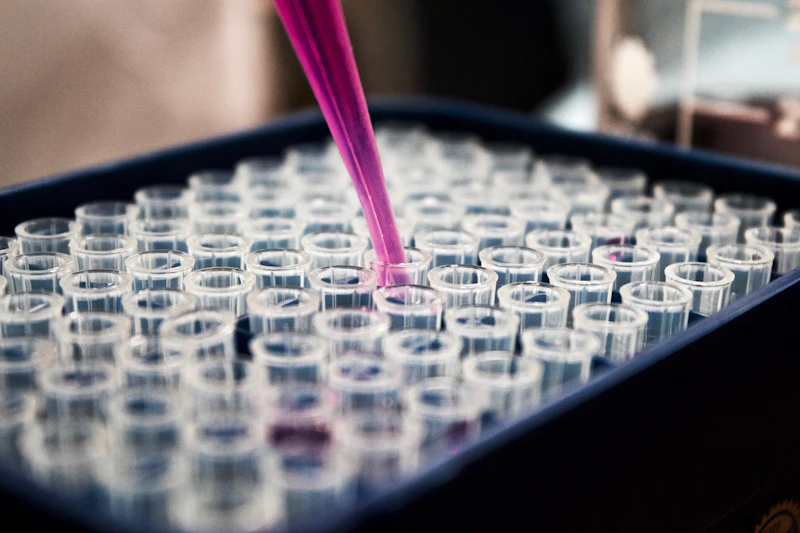
Biomarkers — measurable indicators of biological states or conditions — are fundamental to modern medicine. They guide diagnosis, prognosis, treatment selection, and monitoring. Yet discovering reliable biomarkers remains extraordinarily difficult. Traditional approaches are slow, expensive, and plagued by poor reproducibility. Of the thousands of biomarker candidates published each year, fewer than 1% ever reach clinical validation.
Artificial intelligence is transforming this landscape. Machine learning algorithms can sift through massive multi-omics datasets, identify subtle patterns invisible to human analysis, and predict which biomarker candidates are most likely to succeed clinically. This article explores how AI is accelerating every stage of the biomarker discovery pipeline.
The Biomarker Discovery Pipeline
Stage 1: Discovery
The discovery phase involves profiling biological samples (blood, tissue, urine) from patients and controls using omics technologies. The goal is to identify molecular features that differ between groups. Key technologies include:
-
Proteomics: Mass spectrometry-based or affinity-based (Olink, SomaScan) protein profiling
-
Genomics: Whole-genome or exome sequencing, GWAS data
-
Transcriptomics: RNA-seq or microarray gene expression profiling
-
Metabolomics: LC-MS or NMR-based metabolite profiling
-
Liquid biopsy: Circulating tumor DNA (ctDNA), exosomes, circulating tumor cells
Stage 2: Verification
Promising candidates from discovery are verified in independent cohorts using targeted assays. For proteins, this typically involves selected/multiple reaction monitoring (SRM/MRM) or parallel reaction monitoring (PRM) on triple quadrupole or high-resolution mass spectrometers.
Stage 3: Validation
Validated candidates are tested in large, well-powered clinical cohorts using clinical-grade assays (ELISA, immunoassays, clinical MS platforms). This stage requires rigorous study design, pre-specified analysis plans, and often multi-center collaboration.
Stage 4: Clinical Implementation
Approved biomarkers are deployed as diagnostic tests, requiring regulatory approval (FDA, CE marking), clinical laboratory validation, and integration into clinical workflows.
How AI Transforms Biomarker Discovery
Feature Selection and Dimensionality Reduction
Omics datasets contain thousands to millions of features measured in tens to hundreds of samples. This extreme dimensionality imbalance makes traditional statistical approaches prone to false discoveries. AI methods address this through:
-
Regularized models: LASSO (L1 regularization) and Elastic Net automatically select the most informative features while controlling overfitting. These methods produce sparse models with interpretable feature sets.
-
Tree-based methods: Random forests and gradient boosting (XGBoost, LightGBM) provide feature importance rankings that identify the most discriminative biomarkers. SHAP values from tree models offer detailed feature contribution analysis.
-
Deep feature selection: Autoencoders learn compressed representations that capture the essential variation in omics data. Attention mechanisms in transformer models highlight the most relevant features for each prediction.
Multi-Omics Biomarker Panels
Single biomarkers rarely achieve sufficient sensitivity and specificity for clinical use. AI excels at combining multiple biomarkers into panels with superior performance. Machine learning models integrate features across omics layers — combining protein, metabolite, and genetic markers — to create multi-analyte signatures that capture disease biology more comprehensively than any single marker.
For example, a pancreatic cancer diagnostic panel might combine:
-
CA19-9 (traditional protein biomarker)
-
ctDNA methylation patterns from liquid biopsy
-
A panel of 5-10 plasma proteins identified by AI from proteomic profiling
-
Metabolomic signatures reflecting altered lipid metabolism
Transfer Learning for Small Cohorts
A persistent challenge in biomarker discovery is limited sample sizes. Collecting well-characterized clinical samples is expensive and time-consuming. Transfer learning addresses this by pre-training models on large, publicly available datasets (TCGA, GTEx, UK Biobank) and fine-tuning on the target cohort. This approach leverages learned biological representations to improve performance even with small sample sizes.
Survival Analysis with Deep Learning
Prognostic biomarkers predict disease outcomes. Deep learning models like DeepSurv, Cox-nnet, and neural network-based Cox regression extend traditional survival analysis to handle high-dimensional omics data, non-linear relationships, and complex interactions. These models identify prognostic signatures from gene expression, proteomic, or multi-omics data that outperform classical clinical predictors.
Case Studies in AI-Driven Biomarker Discovery
Cancer Early Detection
GRAIL's Galleri test uses machine learning on cell-free DNA methylation patterns to detect over 50 cancer types from a single blood draw. The model was trained on methylation sequencing data from thousands of cancer patients and non-cancer controls. A targeted methylation sequencing approach captures ~100,000 informative CpG sites, and a classifier predicts both the presence of cancer and the tissue of origin.
Alzheimer's Disease Blood Biomarkers
AI models analyzing plasma proteomic data have identified blood-based biomarkers for Alzheimer's disease that can detect pathology years before symptom onset. Machine learning panels combining p-tau217, GFAP, Aβ42/40 ratio, and NfL achieve diagnostic accuracy comparable to CSF biomarkers and PET imaging, enabling population-level screening.
Cardiovascular Risk Prediction
The UK Biobank Pharma Proteomics Project profiled ~3,000 proteins in 54,000 participants with long-term follow-up. Machine learning models identified proteomic signatures that predict incident cardiovascular events, heart failure, and atrial fibrillation years before clinical onset, outperforming traditional risk scores like the Framingham Risk Score.
Computational Tools for AI-Driven Biomarker Discovery
Python Ecosystem
`# Typical biomarker discovery pipeline in Python import pandas as pd from sklearn.model_selection import StratifiedKFold, cross_val_score from sklearn.ensemble import RandomForestClassifier, GradientBoostingClassifier from sklearn.linear_model import LogisticRegression from sklearn.preprocessing import StandardScaler from sklearn.pipeline import Pipeline from sklearn.metrics import roc_auc_score import shap
Load omics data
X = pd.read_csv("proteomics_data.csv", index_col=0) y = pd.read_csv("clinical_labels.csv")["diagnosis"]
Build pipeline with feature selection
pipe = Pipeline([ ("scaler", StandardScaler()), ("model", GradientBoostingClassifier(n_estimators=500, max_depth=3)) ])
Nested cross-validation for unbiased performance estimation
outer_cv = StratifiedKFold(n_splits=5, shuffle=True, random_state=42) scores = cross_val_score(pipe, X, y, cv=outer_cv, scoring="roc_auc") print(f"AUC: {scores.mean():.3f} ± {scores.std():.3f}")
SHAP analysis for feature importance
pipe.fit(X, y) explainer = shap.TreeExplainer(pipe["model"]) shap_values = explainer.shap_values(pipe["scaler"].transform(X)) shap.summary_plot(shap_values, X) `
R Packages
-
caret/tidymodels: Unified frameworks for model training and evaluation
-
glmnet: LASSO and Elastic Net regularized regression
-
survminer/survival: Survival analysis and Kaplan-Meier visualization
-
MOFA2: Multi-omics factor analysis for biomarker panel discovery
Challenges and Best Practices
Avoiding Overfitting
The single most important concern in computational biomarker discovery is overfitting. With thousands of features and limited samples, any machine learning model can find spurious patterns that don't generalize. Essential safeguards include:
-
Nested cross-validation: Separate feature selection and model evaluation into inner and outer loops
-
Independent validation cohorts: Always validate in a completely separate dataset
-
Permutation testing: Verify that performance exceeds what would be expected by chance
-
Pre-registration: Define analysis plans before looking at data
Biological Plausibility
AI models can identify statistically significant but biologically meaningless patterns. Always evaluate discovered biomarkers for biological plausibility. Do the selected proteins have known roles in the disease? Are they expressed in relevant tissues? Do pathway analyses of the biomarker panel converge on known disease mechanisms?
Clinical Utility
A biomarker with excellent statistical performance is useless if it doesn't change clinical decisions. Consider: Does the biomarker provide information beyond existing tests? Is the measurement feasible in clinical settings? Is the cost justified by the clinical benefit?
Conclusion
AI is dramatically accelerating biomarker discovery by enabling researchers to extract meaningful signals from complex, high-dimensional biological data. From feature selection to multi-omics integration to clinical validation, machine learning methods are improving every stage of the pipeline. However, computational sophistication must be paired with rigorous study design, independent validation, and clinical utility assessment. The most successful biomarker discovery programs combine AI capabilities with deep domain expertise, robust sample collections, and a clear path to clinical implementation. As omics technologies become cheaper and AI methods more powerful, we can expect a new wave of clinically validated biomarkers that will transform disease diagnosis, prognosis, and treatment selection.
관련 읽을거리
- 💊 비타민D 부족이 만성피로의 원인? 혈액검사로 확인하세요 — Genobalance
- 🧠 AI가 뇌 영상을 분석하는 시대: 신경과학에서의 딥러닝 — K-Brain Map
- 💻 인공지능이 과학 발견을 가속화하는 미래 — BRIC
관련 글
Machine Learning in Systems Biology: Methods, Applications, and Best Practices
2월 11일 · 8 min read
Computational BiologyMachine Learning in Drug Discovery — How AI Is Transforming Pharma in 2026
2월 20일 · 8 min read
AI/신약개발How AI is Revolutionizing Drug Discovery
1월 22일 · 7 min read
BioinformaticsCan Flux Balance Analysis Predict Antibiotic Synergy? 107,296 Simulations Say No — and What to Do Instead
6월 5일 · 8 min read